Retrofit of the Library Building of the University of Bremen
Retrofit Concept The main part of the retrofit is the redesign of the HVAC System. A detailed survey of the existing plant including monitoring and simulation was the basis of planning the retrofit. Experiments established the link between the ventilation rate and indoor air quality. Further the air conditioned area could be reduced by about 10% by installing operable windows in perimeter offices. Retrofitting the facades improved thermal and visual comfort. Formerly inaccessible book storage areas were converted into open access areas.
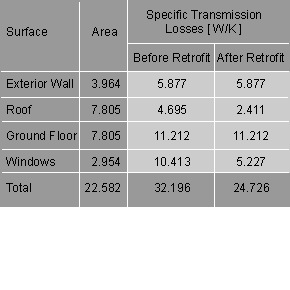
Building Construction Although the energy profile of the building is core dependent, the energy saving potential of retrofitting the facades is significant, and improves indoor climate. The installation of operable windows in perimeter offices was accompanied by the application of new glazing with a lower U-Value and energy transmission coefficient of 0,38. The ground plate with a U-value of 1,4 W/m²K could not be retrofitted as a cost effective and practicable solution was not found. In roof areas additional insulation was applied.
Heating / Ventilation / Cooling and Lighting Systems Originally heating and cooling was delivered exclusively by supply air. The installation of separate radiators at the facades and decentralised cooling units in the core of the building allows heating and cooling to be provided independently from the ventilation system and hence the mechanical ventilation can be turned off outside opening hours. A variable air change rate and the installation of heat recovery further contributes to energy savings. The air curtain in the window area could be completely abandoned as the U-Value of the gazing was improved. In offices with operable windows the radiators are automatically shut-off when the window is open. The electric lighting system plays an important role in the retrofitting strategy because of the large number of operating hours and the relatively small fraction of daylit zones. New efficient luminaires with T5 lamps and electronic ballasts have been installed. The suspended ceiling of louvers was replaced by plasterboard ceilings in order to allow an optimised placing of luminaires with respect to the position of bookshelves. The design illuminance was increased to optimise visual comfort. In daylit areas daylight responsive controls have been installed. The furnishing was repositioned in order to increase daylight penetration. A new control strategy was applied to the motorised louvers blinds.